G-8
At G-8, tied-back and raker-braced soldier piles supported excavation near historic buildings. A nearby basement wall constrained the rakers, and a tied-back raker pad provided support while the P4 level was excavated.
 Cefali& AssociatesContact
Specialty structural engineering
Soldier piles, lagging, and bracing designed together for excavations with changing depths, tight boundaries, and limited working room.
How it works
Soldier pile shoring uses spaced structural piles with lagging installed between them as excavation proceeds. Depending on depth and site conditions, the wall may work in cantilever or be supported by tiebacks, rakers, or internal braces. Pile installation, ground conditions, bracing, and excavation sequence all affect the design.
Because the system is assembled along the excavation edge, it can adapt to changing heights and constraints. The same flexibility brings coordination work: pile locations must avoid existing foundations and utilities, lagging must follow the excavation, and support members must leave room for the permanent structure.
Site conditions
A soldier pile wall can use different bracing along the same excavation as depths, neighboring structures, and property rights change. Cefali designs the piles, lagging, and support connections around those conditions, with room for drilling equipment and the permanent foundations.
Engineering services
Cefali & Associates designs soldier pile systems around excavation loads, ground conditions, adjacent structures, and construction access.
We agree the drawings, calculations, and support during construction with you in the proposal.
Design considerations
Piles have to fit where equipment can install them, and their bracing has to work as the excavation gets deeper. Nearby footings, utilities, and the new foundations all affect the layout.
In practice / Intuit Dome
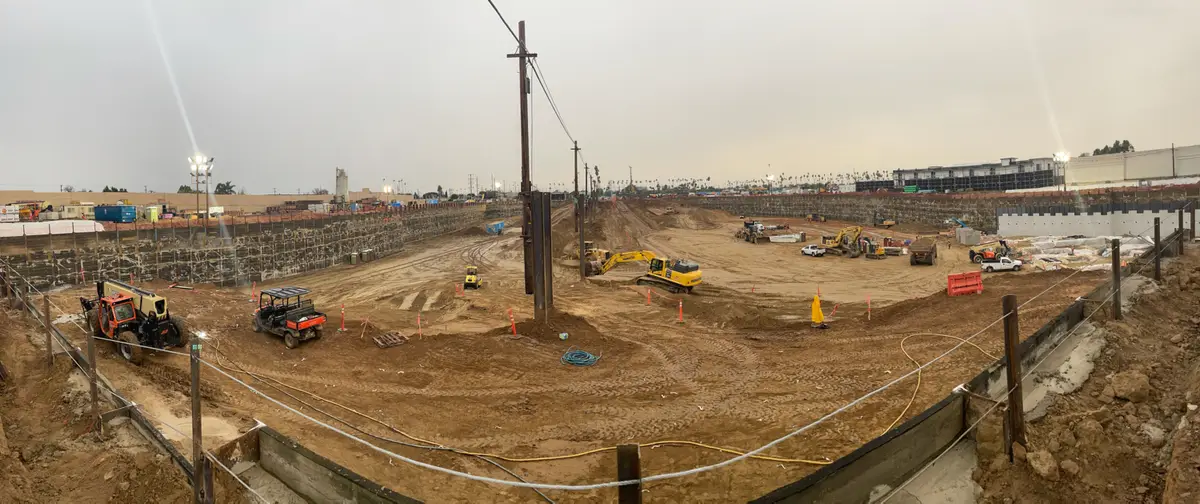
Intuit Dome used cantilever and tieback-braced soldier piles around below-grade work. At the entrance tunnel, a cross-lot braced system replaced tiebacks where agreements could not be secured.
See the Intuit Dome projectAt G-8, tied-back and raker-braced soldier piles supported excavation near historic buildings. A nearby basement wall constrained the rakers, and a tied-back raker pad provided support while the P4 level was excavated.
At Vista Monterey, soldier-pile walls flanked the soil-nail wall where nail easements were not available. The property boundary directly changed which retaining system could be used along different portions of the site.
Related project work
See the systems, site conditions, and construction details from these projects.
Before you begin
No. The required support depends on excavation height, loads, movement limits, and site access. Cantilever piles or internal bracing may be options in some conditions.
Nearby foundations and utilities, drilling clearance, ground conditions, and excavation stages all affect the pile layout.
Yes, when designed for that use. The permanent wall needs details and design criteria for the finished site; a wall designed only for temporary support cannot automatically serve that role.
Lagging is installed as the ground is exposed, so the excavation sequence and access affect the wall detail. The geotechnical recommendations and contractor’s method are important inputs.
Discuss your project
Send the drawings, reports, and site information you already have, along with your schedule and the work you need help with. You do not need a complete design package to get in touch.