Transit below or beside the cut
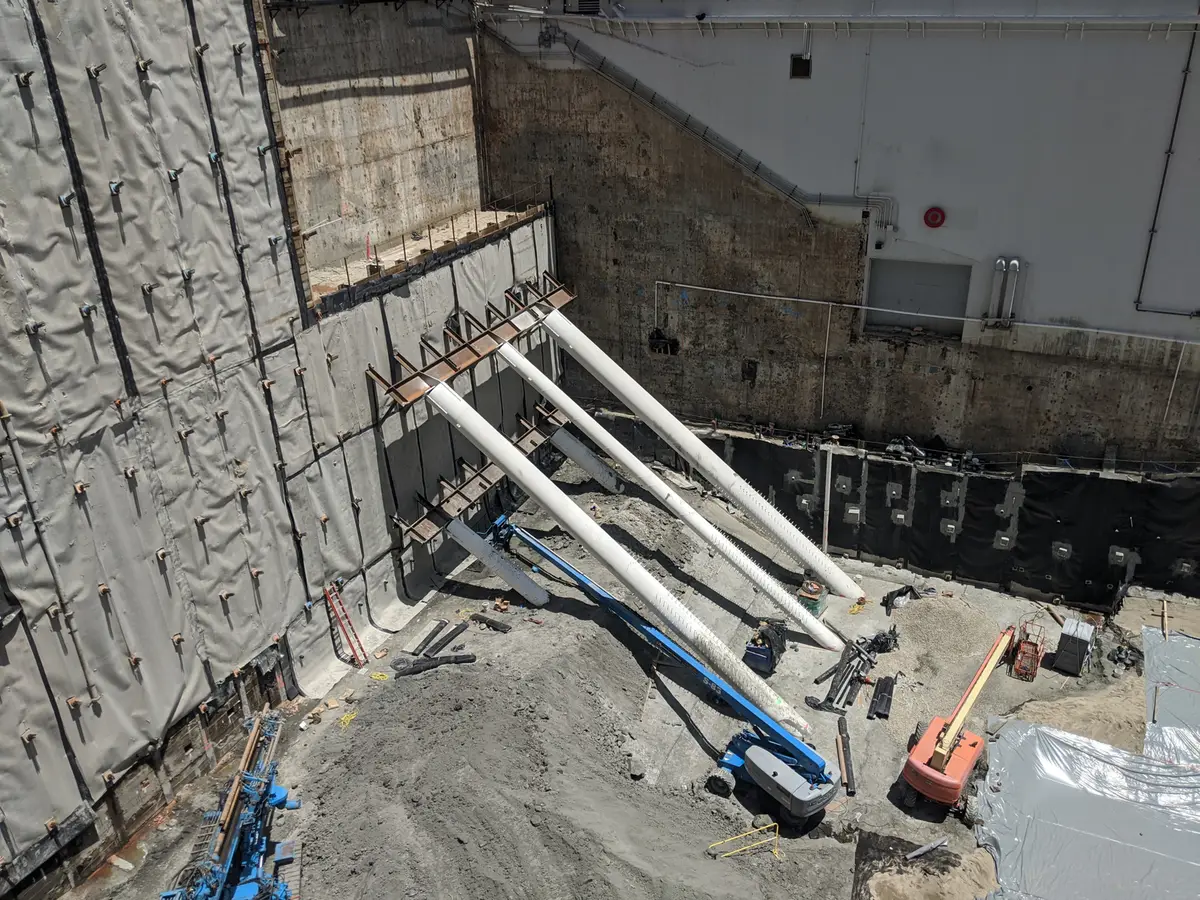
At Wilshire Grand Center in Downtown Los Angeles, Metro tunnels lay close to the soldier piles. The shoring used tiebacks above and preloaded rakers at and below tunnel level, with instrumentation during excavation.
 Cefali& AssociatesContact
A deep excavation for a commercial development in Los Angeles can run close to an existing building, a transit tunnel, or a property line. Those constraints can limit where anchors fit and how much room the contractor has to excavate and build. Cefali & Associates designs temporary shoring for large commercial projects with these constraints.
At Wilshire Grand Center, Cefali designed excavation support using preloaded rakers at and below the level of nearby Metro tunnels. At The Grand, short anchors cleared the active 2nd Street Tunnel, while walers along another edge transferred loads to piles where tiebacks could be installed.
We can scope an early shoring concept, detailed structural drawings and calculations, or a revision during construction. To start, tell us where you are building and what needs to be excavated or supported.
Our engineers
Cefali & Associates was founded in 1994 by David Cefali, S.E., who specializes in temporary and permanent earth shoring systems. Scott Watterson, S.E. focuses on earth retention, soldier pile retaining walls, and temporary shoring. Their biographies include their California engineering licenses.
At Wilshire Grand Center, Cefali designed shoring for a deep excavation beside Metro tunnels. David coauthored a 2016 ASCE conference paper on the design. A separate SME case study credits Cefali as the shoring designer and Malcolm Drilling as the installer.
Site conditions
At Wilshire Grand Center in Downtown Los Angeles, Metro tunnels lay close to the soldier piles. The shoring used tiebacks above and preloaded rakers at and below tunnel level, with instrumentation during excavation.
At The Grand, the active 2nd Street Tunnel limited anchor length. An existing retaining wall also blocked tieback drilling at some piles, so a multi-row waler system transferred loads to other anchor locations.
At 6th & Bixel, petroleum-affected soils required a deeper excavation after the original cut was reached. The soldier piles remained, with added tiebacks and walers for the revised depth.
At Columbia Square in Hollywood, corner braces and rakers supplemented tiebacks around historic buildings. At Century Plaza in Century City, cantilever piles, tiebacks, and rakers supported work beside existing structures.
At BLVD 6200 South in Hollywood, less than five feet separated soldier piles from station walls. Internal bracing supported that edge, while other parts of the excavation used tiebacks.
Published project work
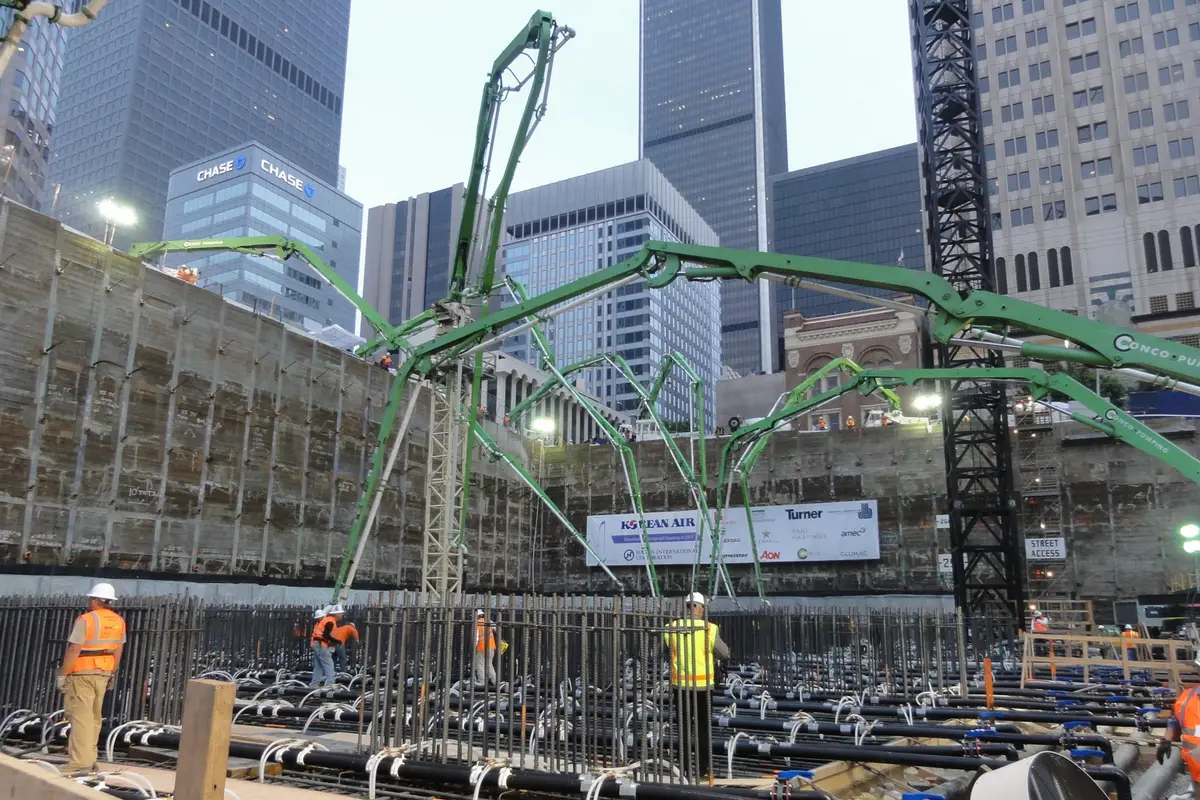
Seven rows of tiebacks and preloaded rakers supported a deep Downtown excavation near Metro tunnels.
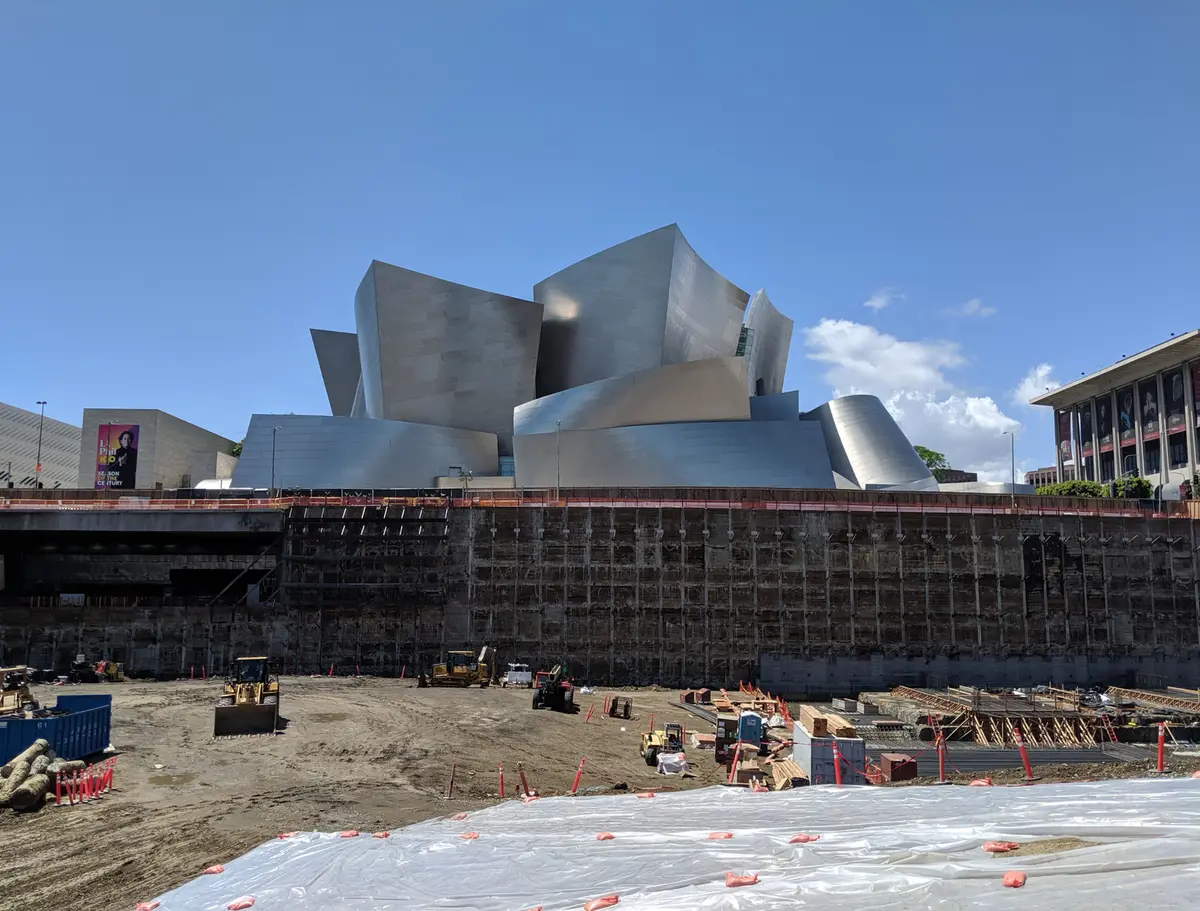
Short anchors and a multi-row waler system worked around a tunnel and existing retaining wall.
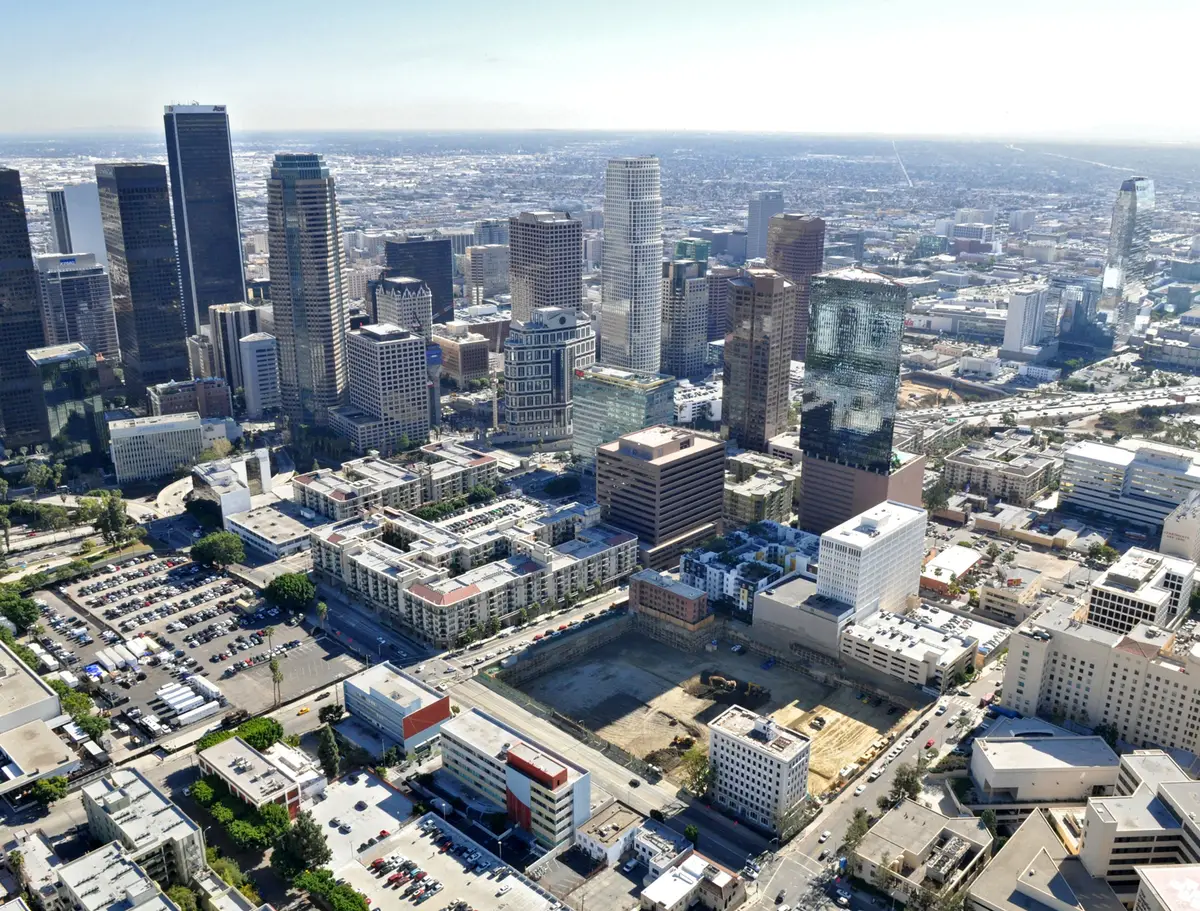
Additional tiebacks and walers supported a deeper garage excavation after site conditions changed.
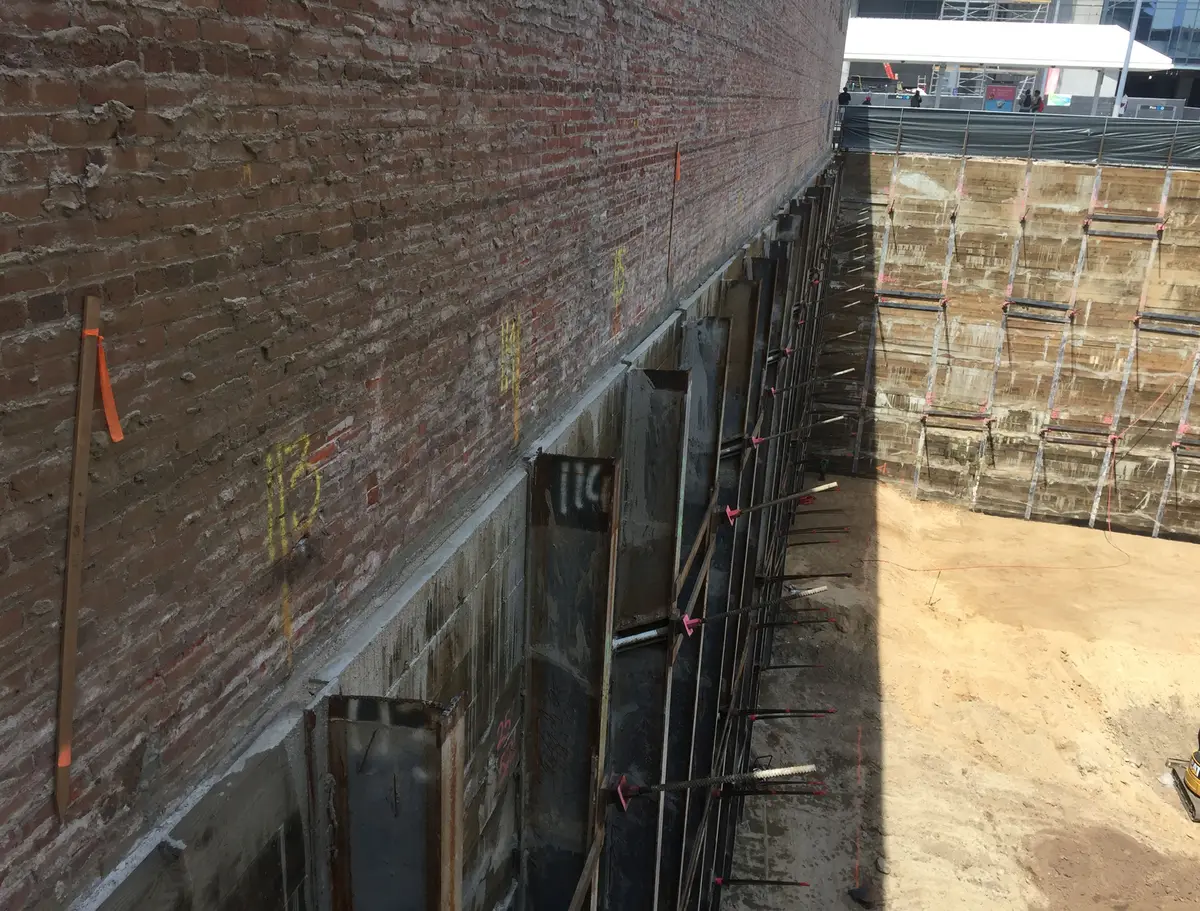
A 55-foot garage shoring redesign coordinated tiebacks near Pico Station in South Park.
Underpinning at an existing vault was designed with corner bracing, walers, and horizontal tiebacks within a narrow Downtown excavation.
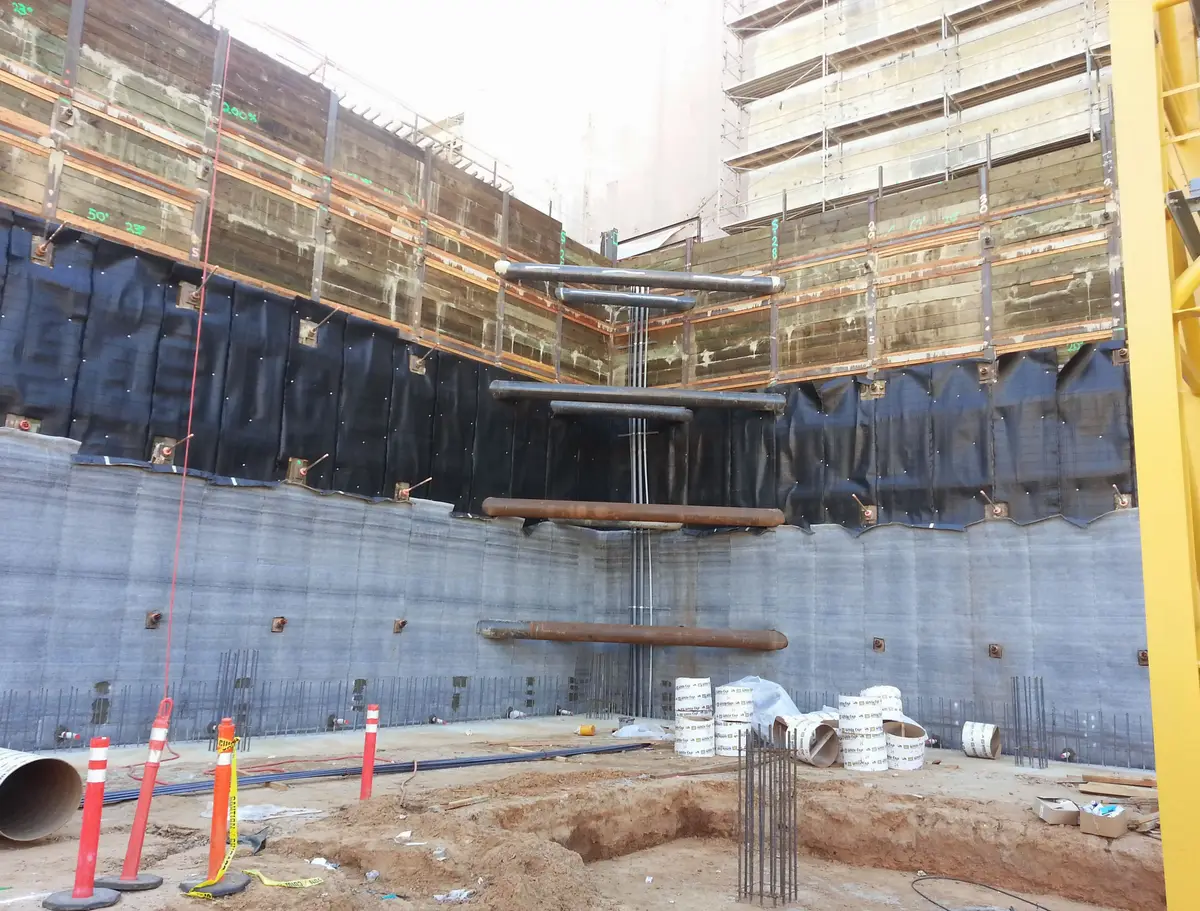
Hollywood excavation support used tiebacks, corner bracing, and rakers around historic structures.
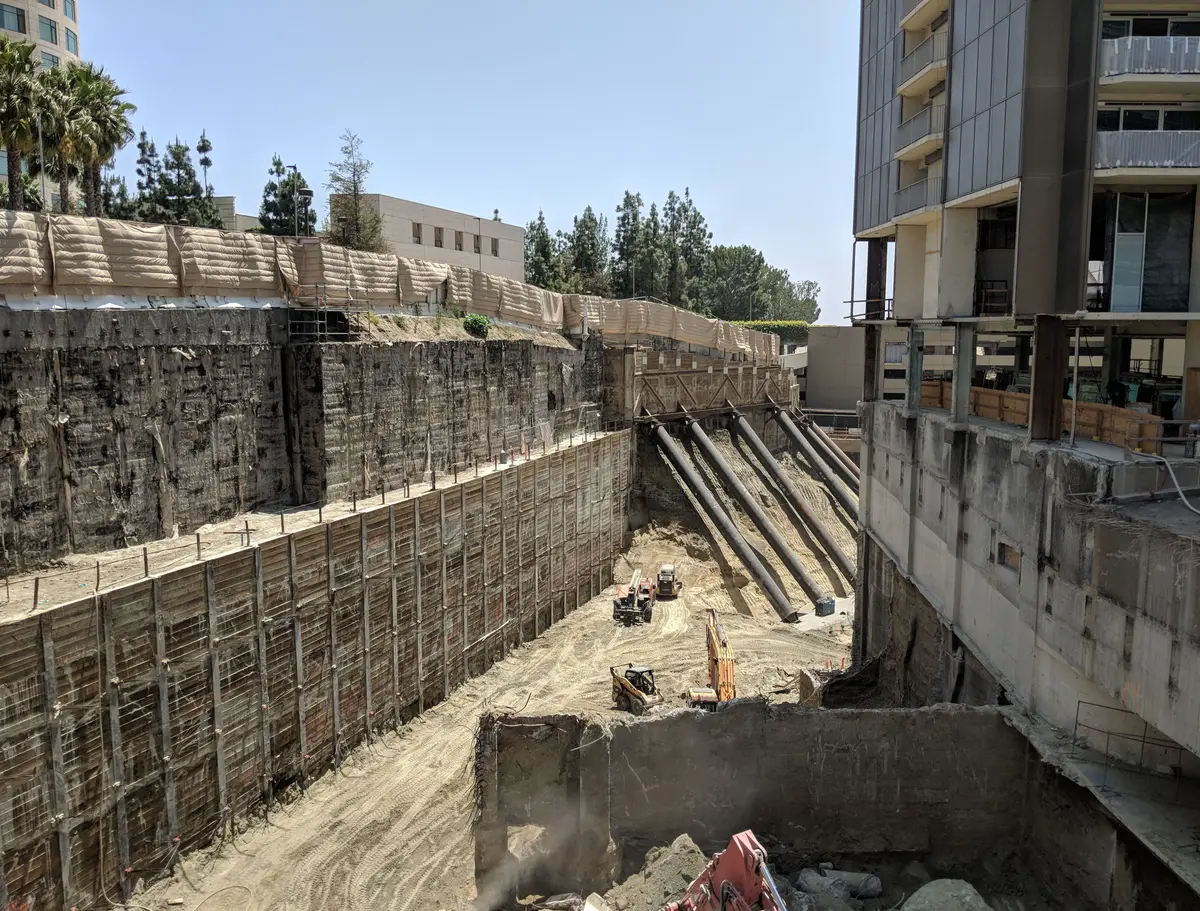
Century City work used cantilever piles, tiebacks, and rakers beside existing buildings.
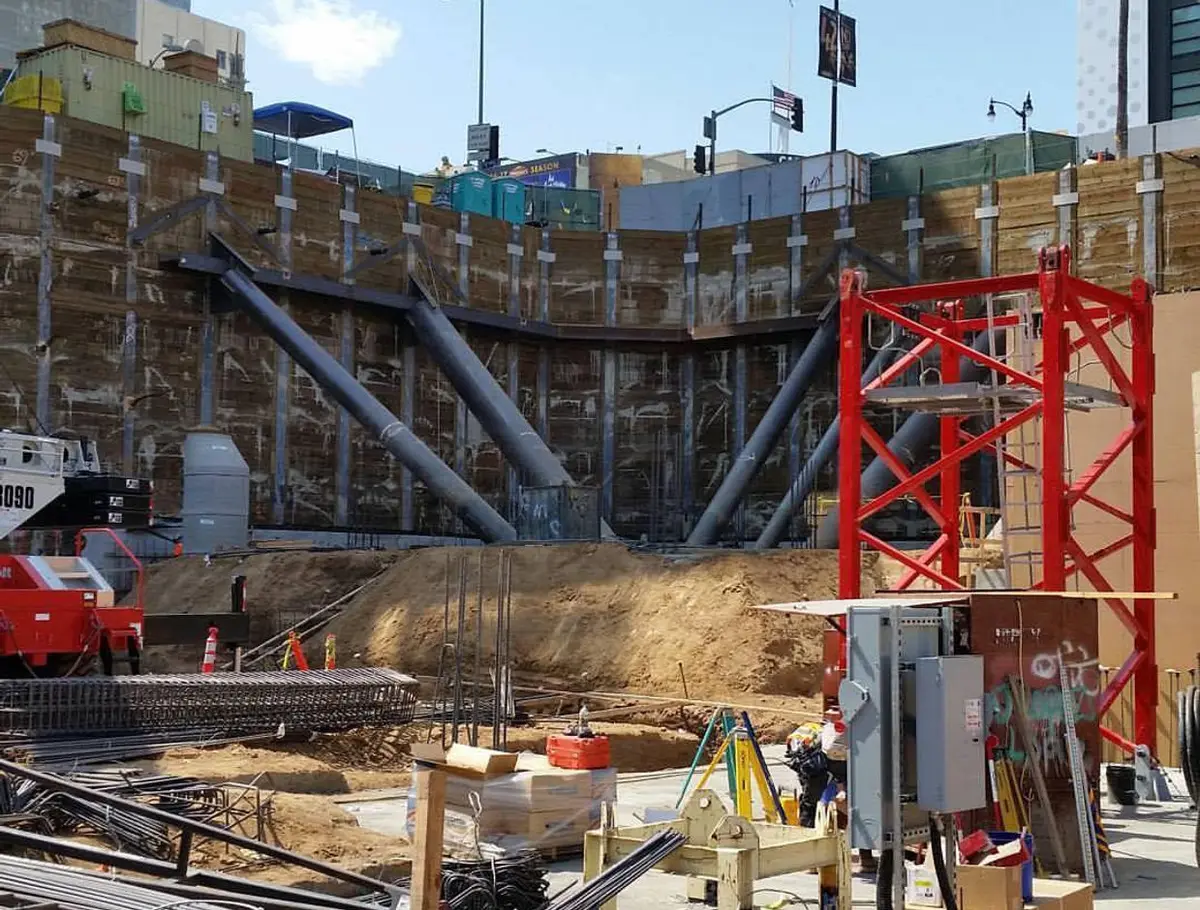
Near Hollywood/Vine Station, internal bracing supported the edge where Metro structures left little room behind the soldier piles.
Engineering scope
These projects show how excavation depth, neighboring structures, access, and the permanent work can change the support design. Your site needs its own geotechnical criteria and structural design. The contractor determines installation and construction means and methods.
Read more about shoring and support of excavation design or explore other published work in Los Angeles.
For the excavation stages, see temporary shoring design. Where the support uses a particular system, see soldier pile shoring and tieback shoring.
Where tiebacks cannot cross a property line, rakers and cross-lot braces bring support inside the cut. Their layout has to leave room for excavation equipment and the permanent foundations.
A cut beside a building needs to account for its existing foundations. Where transit limits anchor space, the Metro-adjacent excavation guide explains documented Los Angeles support arrangements.
An excavation that becomes deeper after piles are installed needs review of the support already in place. Ramps and construction access can also affect loads and the room available for bracing.
If redevelopment keeps existing basement walls, see our Los Angeles earth-retention work.