A transit tunnel beneath the street
At The Grand, the 2nd Street Tunnel restricted anchor length. An existing retaining wall blocked direct tiebacks at some piles, so walers carried those loads toward available anchor locations.
 Cefali& AssociatesContact
Keeping an existing basement wall during redevelopment changes how that wall is supported. Temporary earth retention has to carry the retained ground and nearby loads while the replacement construction proceeds.
At Westfield Century City, Cefali & Associates designed temporary support for portions of an existing four-level basement wall using tiebacks and strongbacks. New decks, deep utilities, and a bridge pier constrained that work. At The Grand, an existing retaining wall and the 2nd Street Tunnel changed where tiebacks could be installed.
Site conditions
At The Grand, the 2nd Street Tunnel restricted anchor length. An existing retaining wall blocked direct tiebacks at some piles, so walers carried those loads toward available anchor locations.
At Westfield Century City, portions of a four-level basement wall were kept in place during redevelopment. Tiebacks and strongbacks supported the wall around new decks, deep utilities, and a bridge pier.
Wilshire Grand Center used multiple tieback levels and preloaded rakers near transit tunnels during phased basement demolition and excavation.
Published project work
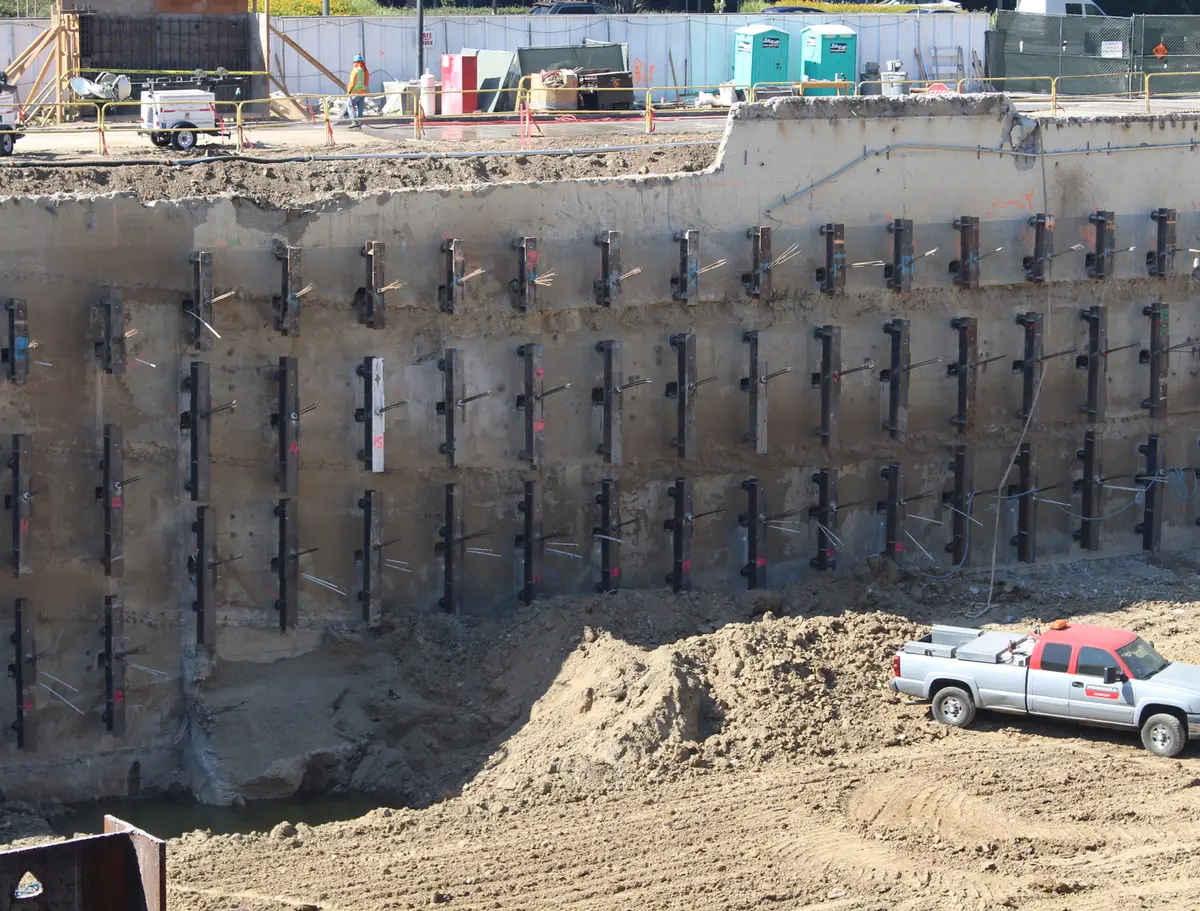
Existing basement walls remained while strongbacks and tiebacks carried temporary earth loads.
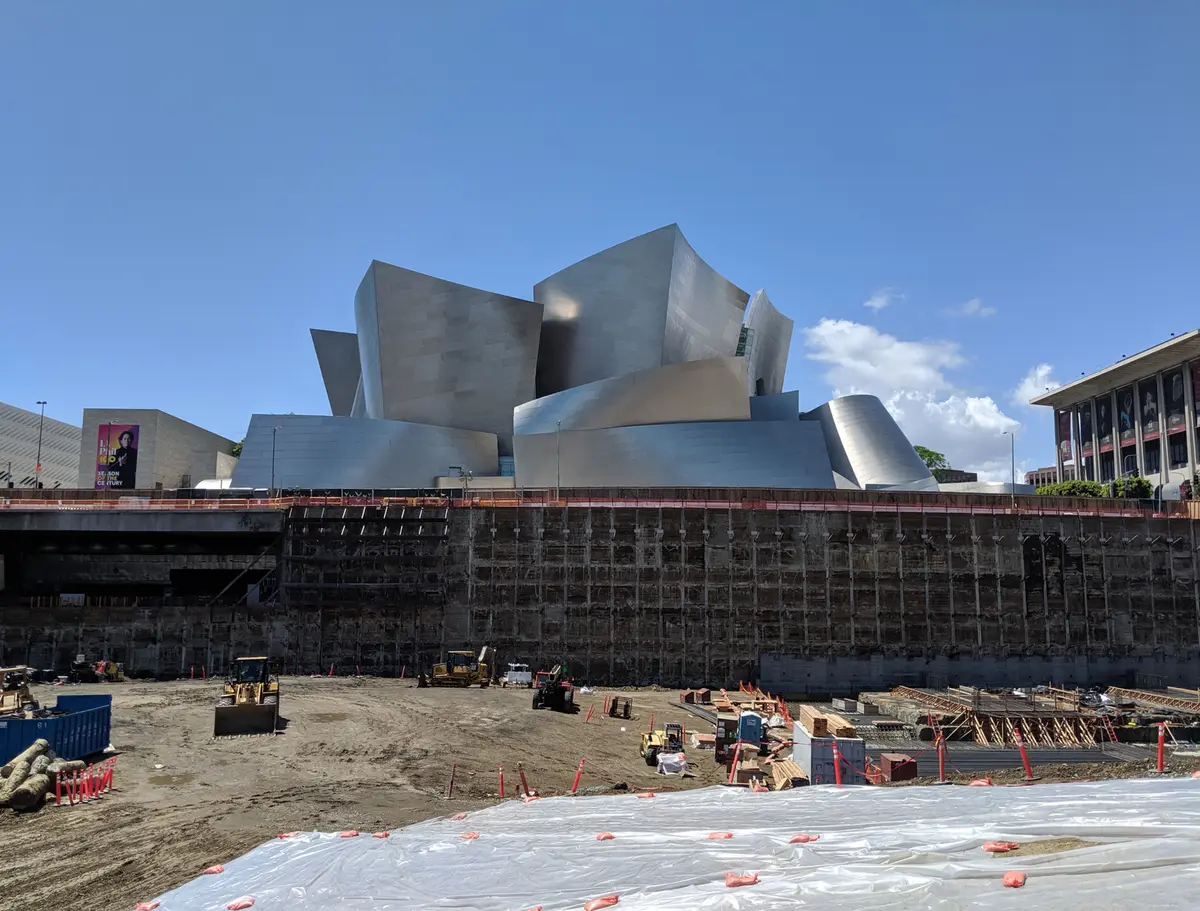
Short anchors and walers supported a deep excavation beside the 2nd Street Tunnel and an existing wall.
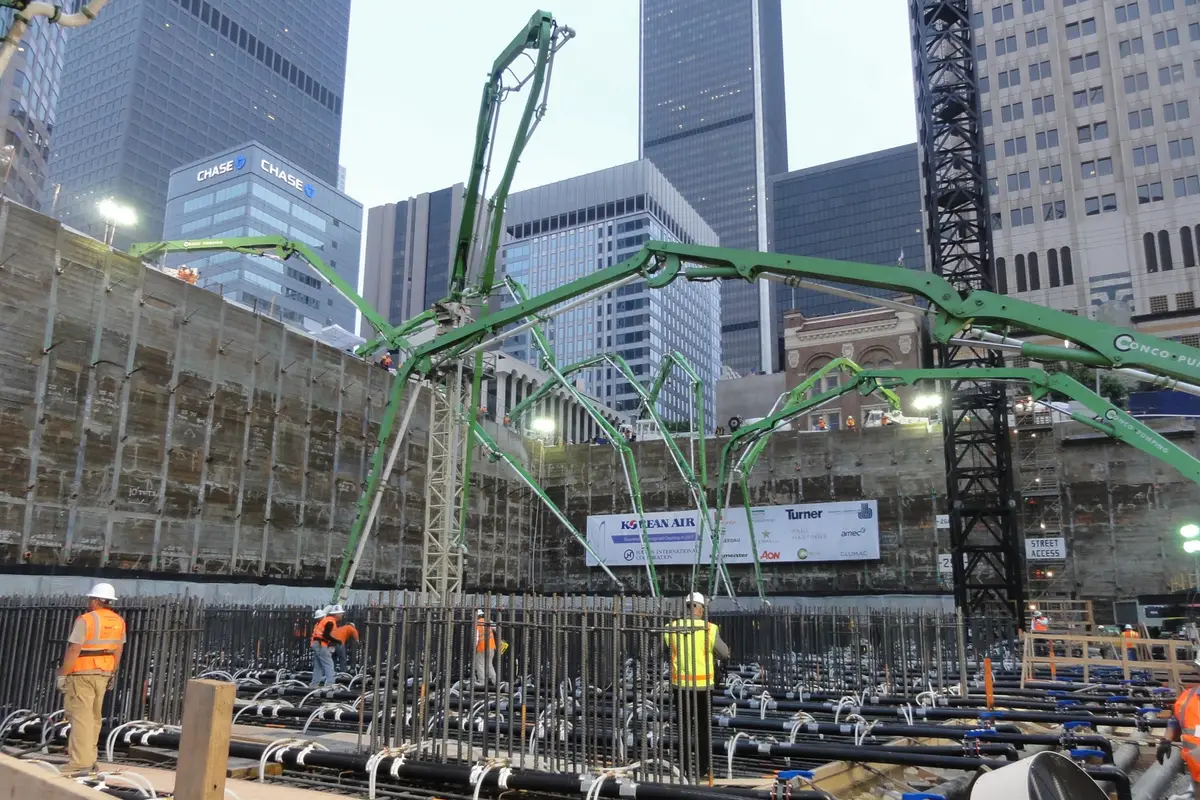
Tiebacks and rakers supported phased excavation near Metro tunnels.
Engineering scope
These projects show how excavation depth, neighboring structures, access, and the permanent work can change the support design. Your site needs its own geotechnical criteria and structural design. The contractor determines installation and construction means and methods.
Read more about shoring and support of excavation design or explore other published work in Los Angeles.
For a retained basement, the existing-wall redevelopment guide explains the temporary support at Westfield Century City. For other excavation conditions and an engineering appointment, see shoring design and engineering in Los Angeles.