

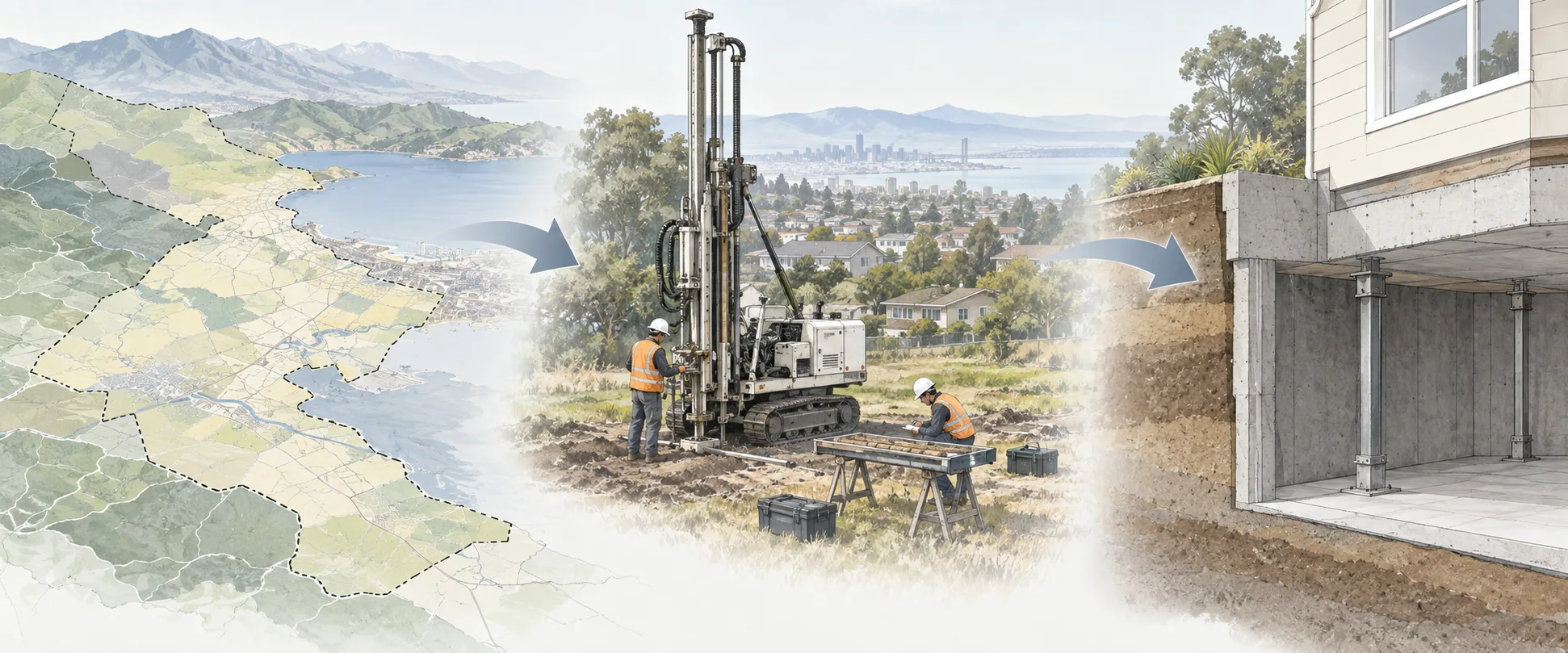
A liquefaction concern can affect the foundation strategy for a Salt Lake City building, but a regional map cannot establish whether a particular basement is feasible. That decision needs the site's ground conditions, the proposed building, and the depth and extent of excavation. The design must address both the permanent structure and the ground support needed to construct it.
Cefali & Associates designs earth-retention systems for the basement excavation. The geotechnical engineer evaluates the site's soils and groundwater and provides recommendations for the proposed work. The shoring engineer uses the recommendations applicable to temporary support; the building's structural engineer addresses the permanent foundations.
Liquefaction changes how susceptible ground behaves
The Utah Geological Survey's liquefaction guidance describes a loss of soil strength when susceptible, water-saturated soils experience earthquake shaking. The hazard depends on the soil, groundwater, and shaking at the site. UGS's broader geologic-hazard resources provide regional background; a site-specific geotechnical assessment establishes the findings and recommendations for the proposed building and excavation.
The basement changes which ground the project encounters
Basement sections locate the excavation relative to the investigated soils and groundwater. A deeper basement, a larger footprint, or a local pit can extend the work beyond the arrangement considered in an earlier report. The geotechnical team needs that geometry to determine whether its findings and recommendations address the current project.
This can affect layout decisions while there is still room to change the project. Moving a basement wall or revising its depth may alter the excavation-support arrangement as well as the permanent foundation work. The consequences should be considered together.
The completed building and the open excavation need their own designs
The permanent foundation supports the building for its intended use. Shoring retains ground while the basement is excavated and constructed. A foundation recommendation does not automatically describe the temporary wall, its supports, or the space needed to install them.
Likewise, a shoring concept should not be presented as resolving the site's overall liquefaction concern. Its structural role is defined by the excavation design and the recommendations applicable to that work. Any ground-treatment or special-foundation response requires the responsible professionals' evaluation.
The guide to geotechnical, structural, and shoring engineers explains how those roles connect. On a basement project, they meet at the excavation geometry, ground recommendations, neighboring structures, and the transition to the permanent work.
Nearby buildings still shape the support system
A liquefaction assessment does not replace the ordinary but essential work of understanding the excavation's surroundings. The depth of nearby foundations, available anchor rights, equipment access, and the room occupied by bracing can all affect a basement support layout.
A site may therefore have two distinct difficulties: a ground condition requiring geotechnical evaluation and a tight excavation with limited construction space. Each needs to be reflected in the design. Treating every constraint as a single soil problem can obscure the physical conflicts the contractor will face.
During acquisition or concept design, the team may be able to identify the investigations and structural work needed without selecting a final system. As the basement layout develops, the geotechnical recommendations and support concept can be refined around it.
To discuss a Salt Lake City basement, contact Cefali & Associates with the proposed depth, site sections, and available ground report, including any liquefaction findings. The proposal preparation guide lists the supporting project information.