A vault beside deep excavation
The 755 Fig excavation ranged from 25 to 97 feet. An existing vault required underpinning, while walers and horizontal tiebacks resolved corner-brace forces where an elevator shaft prevented ordinary tiebacks.
 Cefali& AssociatesContact
When a new excavation reaches below an existing structure, its support may need to be transferred or reinforced before the cut advances. Underpinning details depend on the existing foundation, the proposed depth, and the room available for temporary support.
At 755 Fig in Downtown Los Angeles, an existing vault required underpinning within a narrow excavation. Cefali & Associates also lists underpinning among its work across multiple LAX assignments; that portfolio record does not tie the system to one terminal or facility.
Site conditions
The 755 Fig excavation ranged from 25 to 97 feet. An existing vault required underpinning, while walers and horizontal tiebacks resolved corner-brace forces where an elevator shaft prevented ordinary tiebacks.
At the same Downtown site, a pedestrian bridge and temporary construction platform relied on the shoring. The underpinning had to be considered within that broader support and access arrangement.
Published project work
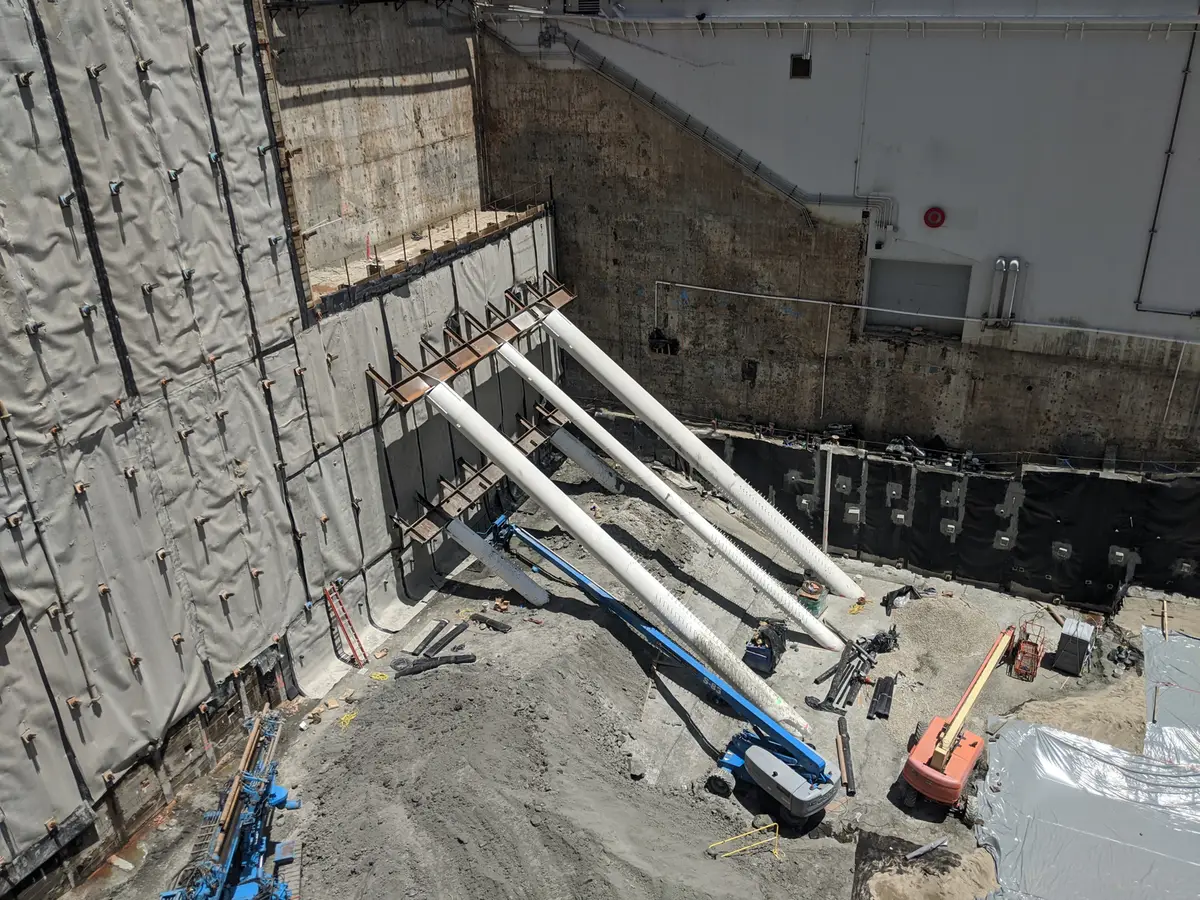
An existing vault required underpinning during deep Downtown excavation and complex temporary bracing.
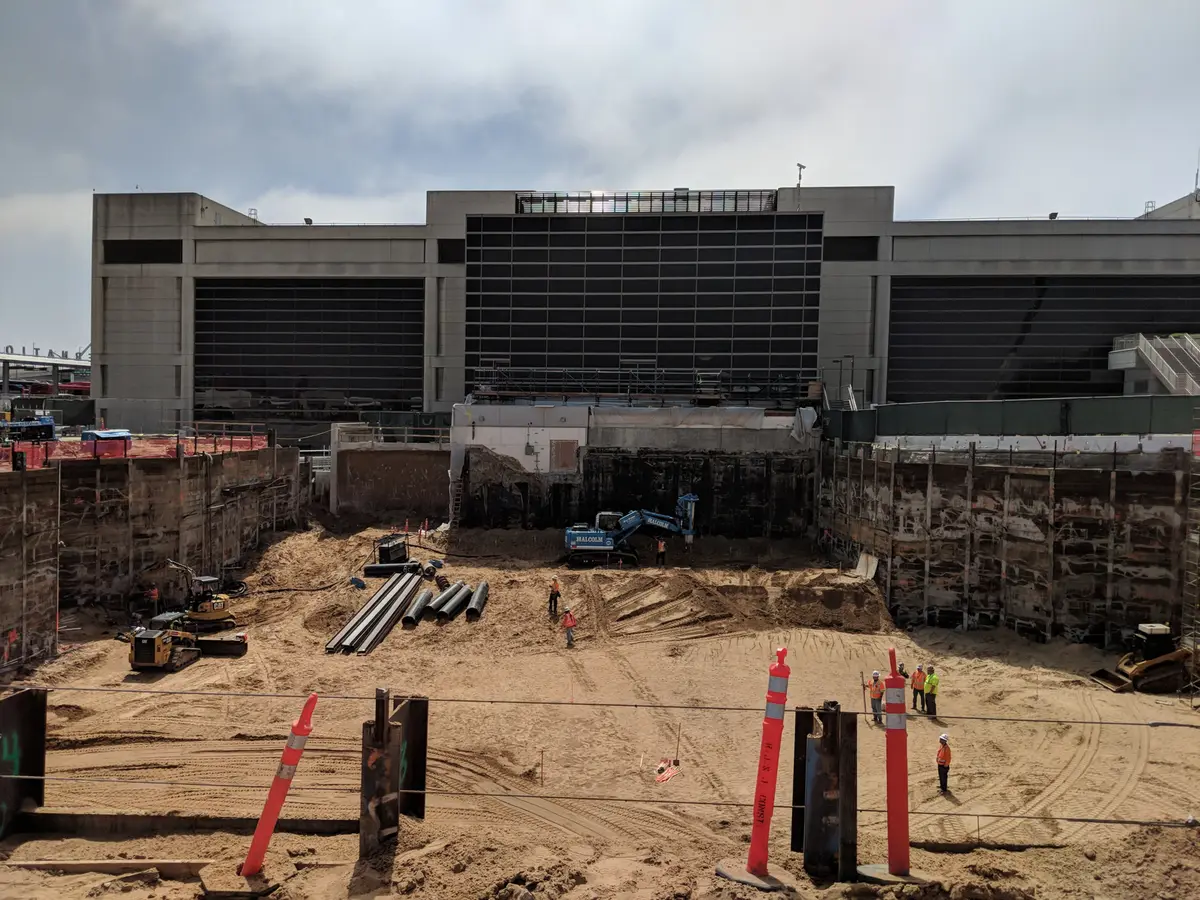
The published LAX portfolio lists underpinning among several types of support work across multiple assignments.
Engineering scope
These projects show how excavation depth, neighboring structures, access, and the permanent work can change the support design. Your site needs its own geotechnical criteria and structural design. The contractor determines installation and construction means and methods.
Read more about underpinning or explore other published work in Los Angeles.