

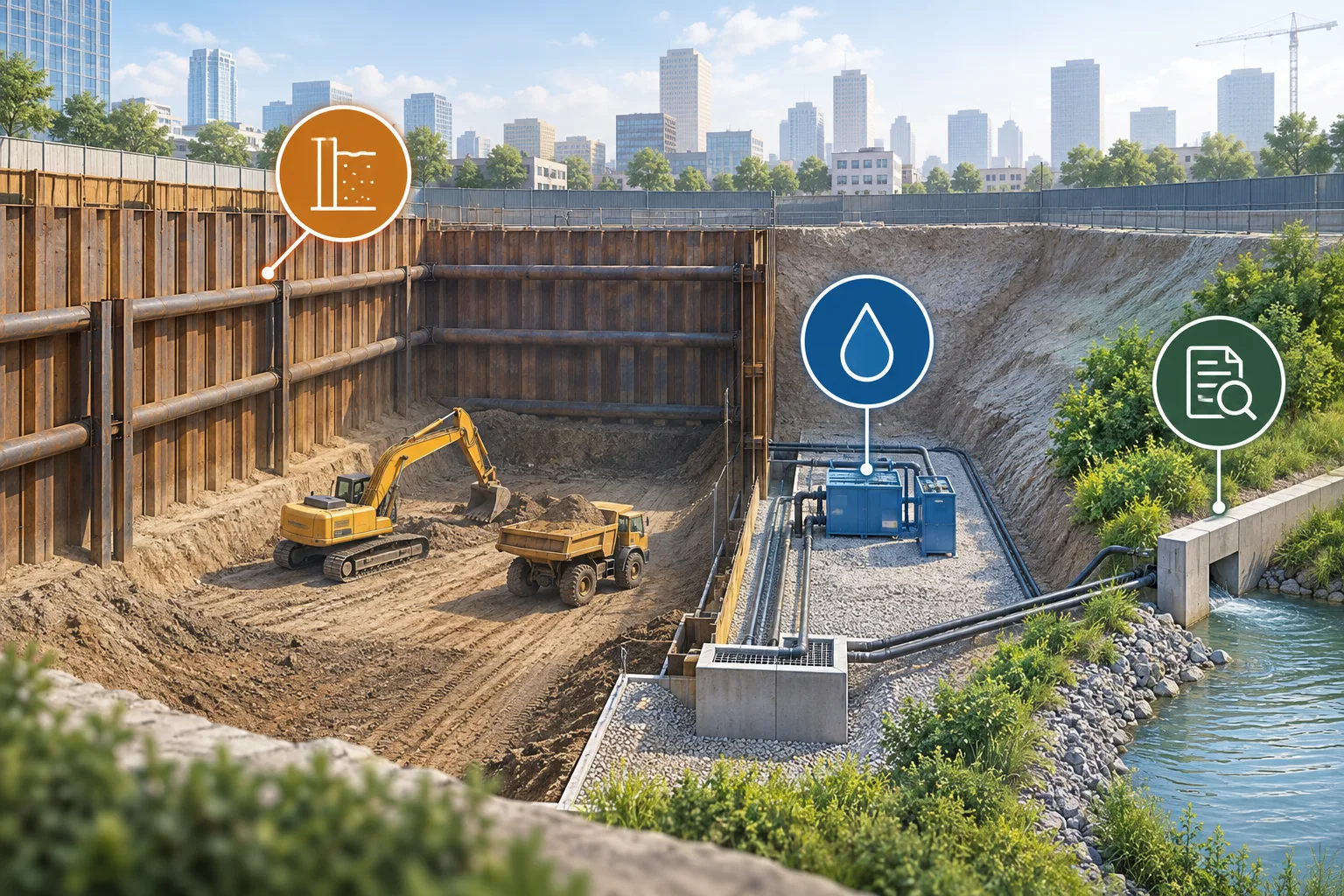
A basement excavation may need both ground support and a way to manage water during construction. In Sacramento, the plan also needs to account for where that water can be discharged. A nearby drain is not an established discharge route, and a finished basement's waterproofing does not manage water while the excavation is open.
The shoring design and temporary water-control approach need to use compatible ground and construction assumptions. The water-control method, operation, and discharge arrangements require their own assigned expertise and scope.
Water during excavation is different from water around a finished basement
Groundwater encountered in a cut, stormwater entering the work area, and water addressed by the permanent building's drainage and waterproofing are different conditions. They occur at different stages and may involve different systems and responsibilities.
For the temporary excavation, the starting information is the site investigation and what it establishes about groundwater, together with the proposed excavation depth and construction stages. An existing report, a field observation, and an unverified assumption should not be treated as equivalent evidence.
The permanent basement design describes the completed structure. Before that structure is complete, the contractor still needs a workable approach to construction water. A specification for a waterproof basement cannot fill that gap.
The shoring and water-control approach need to work together
The shoring designer uses geotechnical recommendations and the proposed excavation conditions. The specialist developing temporary water control needs that same excavation geometry and the relevant ground information. A change to one part of the plan can require review of the other.
For example, a revised basement depth needs to reach both the shoring designer and the team addressing groundwater. Treating it as only a change to the permanent structure can leave the temporary work based on a shallower excavation.
The relationship matters during construction as well. If observations differ from the conditions used for design, the responsible professionals need the new information and any proposed change to the water-control approach. The shoring drawings alone do not authorize a different dewatering method.
A discharge route is part of making the plan workable
The City of Sacramento's dewatering guidance states that discharges to City systems require permission through an approval letter or memorandum of understanding. It distinguishes combined sewer, separate sewer, and storm-drain systems, with additional requirements depending on the discharge.
The City also identifies a separate SacSewer temporary wastewater-discharge permit for sanitary and combined sewer discharges. The receiving system and applicable requirements need to be established for the actual project.
This has a direct construction consequence: a water-control concept that assumes a particular outlet remains conditional until the proposed discharge arrangement is resolved. The team handling that work needs to address any required characterization, monitoring, or reporting. It should not be assumed that all of those services are included in excavation-support engineering.
A short dewatering note can hide a substantial part of the work
Consider an illustrative basement package with completed shoring drawings and a note assigning dewatering to the contractor. One construction approach assumes pumping to an available connection. Another anticipates additional water-quality work and a different permission process.
Those approaches describe different construction requirements, even though they sit beside the same shoring drawings. If the assumed outlet is unavailable, the water-control approach may need to change. The contractor and responsible specialists have to develop that change together, including any effect on the conditions used for the shoring design. A general dewatering allowance cannot establish that the expected outlet or method is available.
Discuss groundwater before the temporary design is settled
An early conversation can begin with the excavation sections and available groundwater information. It is useful to know whether a temporary water-control approach has been proposed and whether anyone has established the receiving system. Missing information can then be addressed while the construction plan is developing.
Contact Cefali about the excavation-support work with that information and any current dewatering proposal. The proposal guide lists the other documents for the shoring request. Identify the consultant or contractor handling water control so the two designs can be developed together.