Excavation and equipment loads
The shoring design accounted for cranes erecting the roof trusses, concrete pumps, and smaller lifting equipment. Those construction loads were part of the support design alongside the retained ground.
 Cefali& AssociatesContact
At Intuit Dome in Inglewood, below-grade construction occupied much of the site, with the court more than 30 feet below existing grade. Cefali & Associates and Malcolm Drilling worked together on earth support that limited excavation layback while preserving construction access.
The arena required different support around its court, internal pools, parking structure, stormwater tanks, and construction ramp. Selecting an earth retention system meant accounting for those spaces, the equipment working above them, and the support needed as construction advanced.
Site conditions
The shoring design accounted for cranes erecting the roof trusses, concrete pumps, and smaller lifting equipment. Those construction loads were part of the support design alongside the retained ground.
Most shoring used cantilever and tieback-braced soldier piles. At the entrance tunnel, unavailable tieback agreements led to cross-lot bracing placed above truck traffic. The support arrangement changed where anchors could not be used.
The project also included permanent shoring at the sunken garden. Temporary excavation support and permanent retention have different design conditions, so their roles and the stages connecting them need to be established for each part of a site.
Published project work
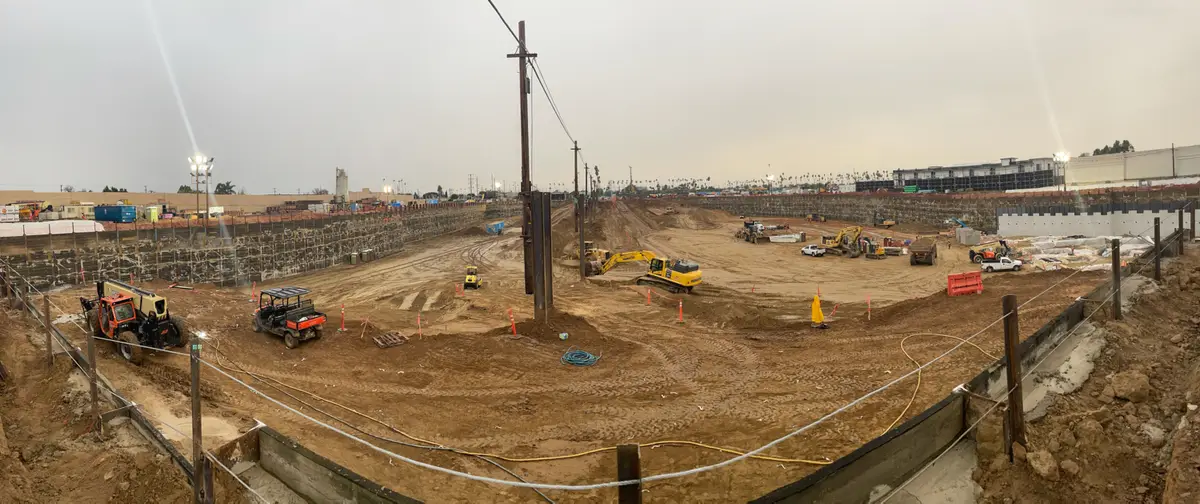
Temporary and permanent earth support around arena construction, equipment loads, a construction ramp, and the entrance tunnel.
Engineering scope
These projects show how excavation depth, neighboring structures, access, and the permanent work can change the support design. Your site needs its own geotechnical criteria and structural design. The contractor determines installation and construction means and methods.
Read more about shoring and support of excavation design or explore other published work in Inglewood.